
In today’s fast-paced and interconnected business environment, supply chain optimization is a critical factor for success. Companies across industries are turning to cutting-edge technologies to streamline and enhance their supply chain workflows. Among these technologies, Artificial Intelligence (AI) emerges as a powerful tool that can bring unprecedented efficiency, visibility, and predictive capabilities to the supply chain. This article explores the various ways AI can optimize supply chain workflows, from demand forecasting to warehouse management and logistics.
I. Introduction to AI in Supply Chain Management
A. Understanding the Supply Chain Landscape
Before delving into the specifics of AI applications, it’s essential to grasp the complexity of modern supply chains. Supply chains involve a network of interconnected processes, including procurement, production, distribution, and logistics. The challenge lies in managing these processes seamlessly while responding to dynamic market demands and unforeseen disruptions.
B. The Role of AI in Supply Chain Optimization
With its ability to analyze vast datasets, learn patterns, and make intelligent predictions, the pivotal role of AI in optimizing supply chain workflows. It enables businesses to make informed decisions, automate repetitive tasks, and adapt swiftly to changes in demand or supply chain disruptions.
II. Demand Forecasting and Planning
Accurate demand forecasting forms the foundation of an efficient supply chain. AI, with its advanced analytics and machine learning capabilities, transforms traditional forecasting methods, offering more precise predictions.
A. Predictive Analytics for Demand Forecasting
AI-driven predictive analytics leverages historical data, market trends, and external factors to forecast future demand more accurately. Machine learning models can identify complex patterns and anomalies, enabling businesses to optimize inventory levels and reduce the risk of stockouts or overstock situations.
B. Dynamic Inventory Management
AI facilitates dynamic inventory management by continuously analyzing real-time data. This allows businesses to adjust stock levels based on changing demand patterns, seasonal variations, and market dynamics. The result is a more responsive and agile supply chain that minimizes excess inventory costs.
III. Supplier Relationship Management
AI extends its capabilities to supplier relationship management, enhancing collaboration and efficiency in the procurement process.
A. Vendor Risk Assessment
Machine learning algorithms can assess and predict potential risks associated with suppliers, such as delays, quality issues, or financial instability. This proactive approach enables organizations to mitigate risks before they impact the supply chain.
B. Automated Procurement
AI-driven automation streamlines the procurement process by intelligently handling routine tasks such as purchase order generation, invoice processing, and supplier communication. This not only reduces manual workload but also minimizes errors and delays in procurement activities.
IV. Warehouse Optimization
Efficient warehouse management is crucial for minimizing storage costs, enhancing order fulfillment speed, and improving overall supply chain performance. AI brings innovation to warehouse optimization through automation and intelligent decision-making.
A. Robotics and Automation
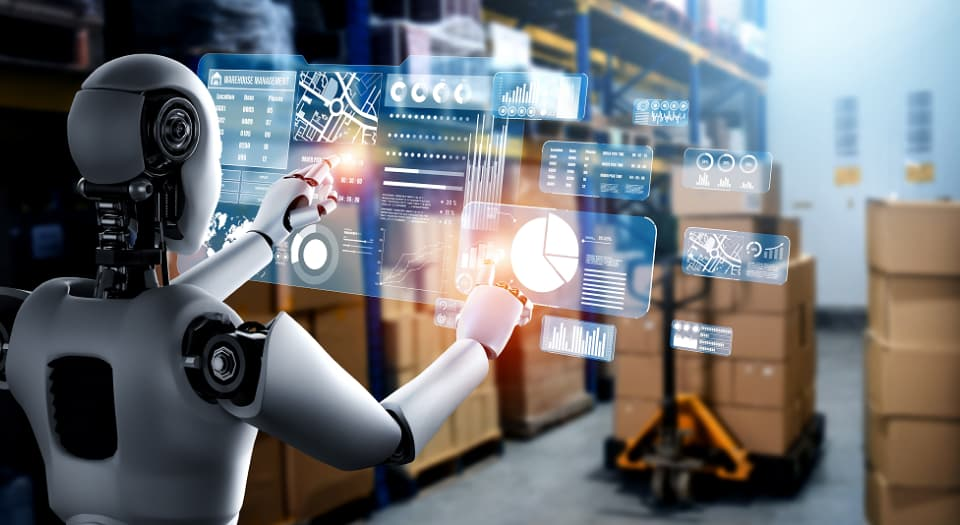
AI-powered robotics automate various warehouse tasks, such as picking, packing, and sorting. These robots work collaboratively with human workers, increasing efficiency, reducing errors, and enabling faster order processing.
B. Predictive Maintenance
AI enables predictive maintenance for warehouse equipment by analyzing sensor data to identify potential issues before they cause downtime. This proactive approach reduces unplanned maintenance costs and ensures continuous warehouse operations.
V. Transportation and Logistics
AI applications in transportation and logistics focus on route optimization, real-time tracking, and efficient resource utilization.
A. Route Optimization
AI algorithms analyze historical traffic data, weather conditions, and real-time information to optimize transportation routes. This not only reduces transportation costs but also minimizes delivery times and improves overall supply chain efficiency.
B. Real-Time Tracking and Visibility
AI provides real-time tracking and visibility into the movement of goods throughout the supply chain. This transparency allows businesses to respond promptly to delays or disruptions, enhancing customer satisfaction and trust.
VI. Predictive Maintenance for Vehicles
In the realm of logistics, AI extends its capabilities to predictive maintenance for vehicles, ensuring the reliability and longevity of the transportation fleet.
A. Condition Monitoring
Sensors installed in vehicles collect data on various parameters such as engine performance, fuel efficiency, and tire health. AI analyzes this data to predict when maintenance is required, reducing the risk of unexpected breakdowns and improving overall fleet management.
B. Optimal Route Planning for Fuel Efficiency
AI algorithms optimize routes not only for delivery speed but also for fuel efficiency. By considering factors like traffic patterns and road conditions, AI helps reduce fuel consumption and associated costs, contributing to sustainable and cost-effective logistics operations.
VII. Blockchain Integration for Transparency
The integration of AI with blockchain technology enhances transparency and traceability in the supply chain.
A. Enhanced Traceability
Blockchain, combined with AI, enables end-to-end traceability of products in the supply chain. This is particularly crucial in industries like food and pharmaceuticals, where tracking the origin and journey of products ensures compliance with regulations and builds consumer trust.
B. Smart Contracts for Automated Transactions
Smart contracts, powered by AI, automate and execute contractual agreements within the supply chain. This includes automated payments, order fulfillment, and compliance checks, reducing paperwork and transaction costs.
VIII. Challenges and Considerations
While the benefits of integrating AI into supply chain workflows are substantial, businesses must be mindful of potential challenges and considerations.
A. Data Security and Privacy
AI relies heavily on data, and ensuring the security and privacy of sensitive information is paramount. Businesses must implement robust cybersecurity measures to protect against data breaches and unauthorized access.
B. Integration Complexity
Integrating AI into existing supply chain systems can be complex. Businesses should carefully plan and execute integration strategies to minimize disruptions and ensure a smooth transition.
C. Skill Gaps and Workforce Training
The implementation of AI requires a skilled workforce capable of managing, interpreting, and leveraging AI-generated insights. Businesses must invest in employee training programs to bridge skill gaps and maximize the benefits of AI technologies.
IX. Future Trends and Innovations
As AI continues to evolve, several trends and innovations are shaping the future of AI in supply chain management.
A. Edge Computing for Real-Time Processing
Edge computing, coupled with AI, enables real-time data processing at the source, reducing latency and enhancing decision-making capabilities. This is particularly relevant in scenarios where immediate responses are critical, such as autonomous vehicles and robotics in warehouses.
B. Swarm Intelligence for Optimization
Swarm intelligence, inspired by the collective behavior of natural systems, is gaining traction for supply chain optimization. AI algorithms mimic the collaborative decision-making seen in swarms, leading to decentralized and adaptive solutions for complex logistics problems.
C. Quantum Computing for Complex Problem Solving
The advent of quantum computing holds promise for solving complex optimization problems inherent in supply chain management. Quantum algorithms have the potential to revolutionize route optimization, demand forecasting, and other intricate challenges.
X. Conclusion
The integration of AI into supply chain workflows represents a transformative leap toward efficiency, responsiveness, and adaptability. From demand forecasting to warehouse optimization and logistics, AI applications are reshaping the way businesses manage their supply chains. While challenges exist, the potential benefits are too substantial to ignore. As technology continues to advance, embracing AI in supply chain management is not just an option but a strategic imperative for businesses seeking to thrive in the ever-evolving landscape of global commerce. By leveraging the power of AI, organizations can build resilient, agile, and intelligent supply chains that are well-equipped to navigate the challenges of the future.
 TechnoAI
Leave a comment