
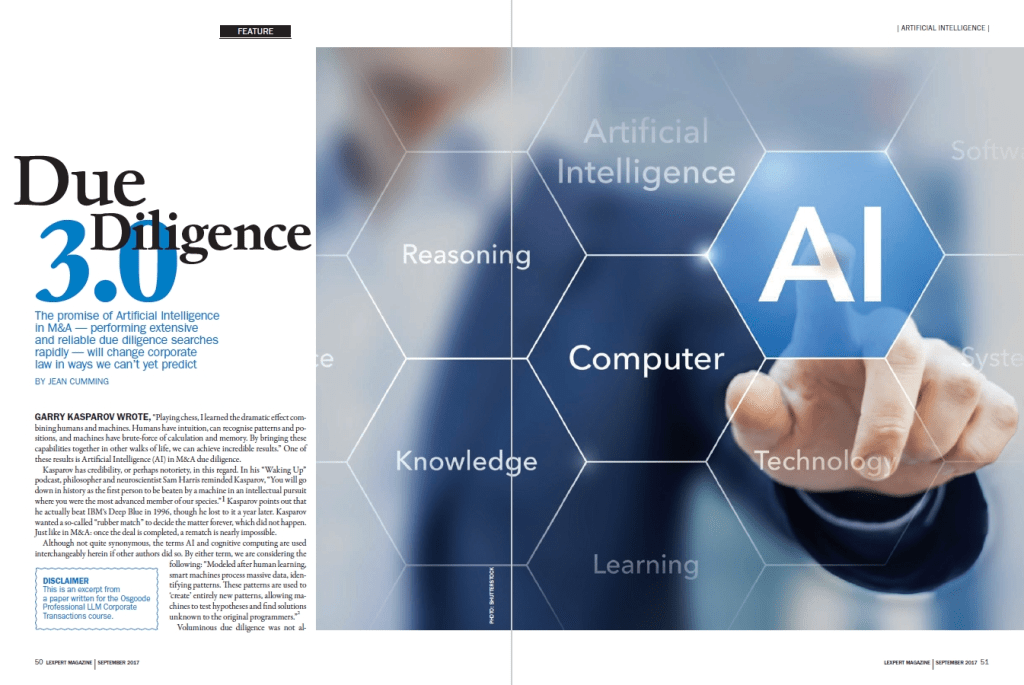
In today’s rapidly evolving business landscape, due diligence plays a pivotal role in mitigating risks and ensuring the success of business transactions. Traditionally, due diligence processes have been time-consuming and resource-intensive, requiring extensive manual effort to review and analyze large volumes of data. However, with the advent of artificial intelligence (AI) technologies, due diligence procedures have undergone a significant transformation. In this comprehensive guide, we delve into the various use cases of AI in due diligence, exploring how AI-powered solutions are revolutionizing this critical aspect of business operations.
Understanding Due Diligence
Before we delve into the use cases of AI in due diligence, let’s first understand what due diligence entails. Due diligence is a comprehensive investigation or audit of a potential investment or business opportunity to assess its viability, risks, and potential benefits. It typically involves reviewing financial records, legal documents, operational processes, and other relevant information to evaluate the target company’s assets, liabilities, and overall health.
Use Cases of AI in Due Diligence
1. Document Review and Analysis
One of the primary use cases of AI in due diligence is document review and analysis. AI-powered solutions, such as natural language processing (NLP) algorithms and machine learning models, can analyze large volumes of documents, including contracts, agreements, financial statements, and legal filings, in a fraction of the time it would take human reviewers. These AI systems can extract key information, identify potential risks and discrepancies, and flag relevant documents for further review by human experts.
2. Financial Analysis and Modeling
AI algorithms can also assist in financial analysis and modeling during due diligence processes. By analyzing financial data from various sources, including balance sheets, income statements, and cash flow statements, AI systems can identify trends, detect anomalies, and perform predictive analytics to assess the financial health and performance of the target company. This enables investors and acquirers to make more informed decisions based on accurate and timely financial insights.
3. Risk Assessment and Compliance
AI-powered due diligence solutions can help identify potential risks and compliance issues associated with a business transaction. By analyzing relevant data sources, such as regulatory filings, litigation records, and industry reports, AI systems can flag potential red flags, such as regulatory violations, legal disputes, and reputational risks. This allows stakeholders to mitigate risks proactively and ensure compliance with applicable laws and regulations.
4. Market and Competitive Analysis
AI technologies can also facilitate market and competitive analysis during due diligence processes. By analyzing market trends, consumer behavior, and competitive landscapes, AI systems can provide valuable insights into market dynamics, emerging opportunities, and competitive threats. This enables investors and acquirers to assess the market positioning and growth potential of the target company relative to its competitors.
5. Intellectual Property Due Diligence
AI can streamline intellectual property (IP) due diligence by automating the analysis of patents, trademarks, copyrights, and other IP assets. AI-powered systems can identify relevant IP assets, assess their value and enforceability, and identify potential infringement risks. This helps stakeholders understand the scope and value of the target company’s intellectual property portfolio and evaluate its potential for future growth and innovation.
Benefits of AI in Due Diligence
1. Improved Efficiency and Accuracy
AI-powered due diligence solutions can significantly improve the efficiency and accuracy of the due diligence process. By automating manual tasks and leveraging advanced analytics capabilities, AI systems can review and analyze large volumes of data more quickly and accurately than human reviewers, reducing the time and resources required for due diligence.
2. Enhanced Risk Management
AI technologies can help identify and mitigate risks more effectively during due diligence processes. By analyzing data from diverse sources and detecting patterns and anomalies, AI systems can flag potential risks and compliance issues early on, allowing stakeholders to take proactive measures to mitigate them.
3. Cost Savings
By automating repetitive tasks and streamlining the due diligence process, AI-powered solutions can help reduce costs associated with due diligence, such as labor costs and time spent on manual review and analysis. This enables organizations to conduct due diligence more efficiently and cost-effectively, maximizing the return on investment (ROI) of their due diligence efforts.
Challenges and Considerations
While AI offers numerous benefits for due diligence, there are also challenges and considerations to be aware of. These include data privacy and security concerns, the need for skilled personnel to develop and implement AI solutions, and the potential for algorithmic bias and errors. It’s essential for organizations to address these challenges proactively and implement robust governance and oversight mechanisms to ensure the responsible use of AI in due diligence processes.
Conclusion
AI has emerged as a powerful tool for transforming due diligence processes, offering a wide range of benefits, including improved efficiency, enhanced risk management, and cost savings. By automating manual tasks, analyzing large volumes of data, and providing valuable insights, AI-powered due diligence solutions enable organizations to make more informed decisions and achieve better outcomes in their business transactions. As AI technologies continue to evolve and mature, we can expect to see further advancements in AI-powered due diligence, driving greater efficiency, accuracy, and transparency in the due diligence process.
 TechnoAI
Leave a comment