
In recent years, the healthcare industry has witnessed a significant transformation driven by advancements in Artificial Intelligence (AI) technology. From streamlining administrative tasks to enhancing patient care delivery, AI has become increasingly integrated into various aspects of healthcare systems worldwide.
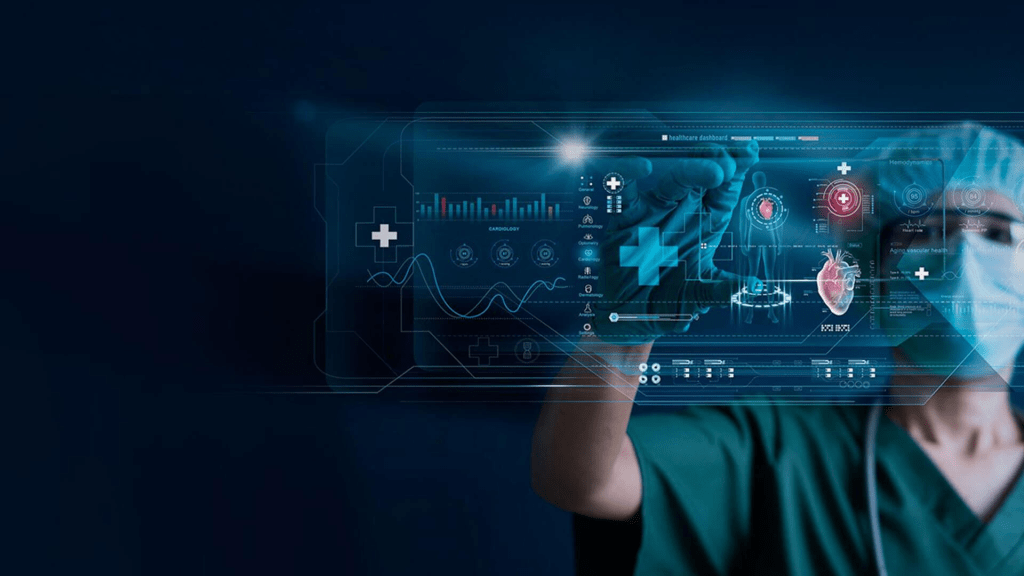
In this article, we’ll explore the latest trends and emerging use cases of AI in healthcare, shedding light on how this transformative technology is reshaping the industry.
Understanding AI in Healthcare
Before delving into the recent trends and use cases, it’s crucial to understand the essence of AI in healthcare. AI refers to the simulation of human intelligence in machines programmed to mimic cognitive functions such as learning, problem-solving, and decision-making. In healthcare, AI algorithms analyze complex medical data, offering insights that aid in clinical decision-making, personalized treatment plans, and operational efficiency improvements.
Recent Developments in AI Healthcare
1. Medical Imaging Interpretation
AI-powered medical imaging interpretation has made significant strides, revolutionizing diagnostic accuracy and efficiency. Advanced algorithms can analyze medical images such as X-rays, MRI scans, and CT scans to detect anomalies, tumors, fractures, and other abnormalities with high precision. For instance, AI-based software can identify early signs of diseases like cancer, enabling prompt intervention and treatment.
2. Predictive Analytics for Disease Prevention
Predictive analytics leverage AI algorithms to analyze vast datasets, including patient health records, genetic information, and environmental factors, to forecast disease outbreaks, identify high-risk patients, and recommend preventive measures. By identifying patterns and trends, healthcare providers can intervene proactively, reducing the incidence of diseases and improving population health outcomes.
3. Virtual Health Assistants
Virtual health assistants powered by AI are becoming increasingly prevalent, offering patients personalized support and guidance round-the-clock. These AI-driven chatbots and virtual assistants can answer queries, schedule appointments, provide medication reminders, and offer basic medical advice, enhancing patient engagement and access to care while reducing the burden on healthcare professionals.
4. Drug Discovery and Development
AI algorithms are revolutionizing the drug discovery and development process, accelerating the identification of potential drug candidates and reducing time and costs associated with traditional methods. Machine learning models analyze vast datasets to predict drug interactions, optimize drug formulations, and identify novel therapeutic targets, ushering in a new era of precision medicine and tailored treatments.
5. Remote Patient Monitoring
With the rise of telemedicine and remote healthcare services, AI-powered remote patient monitoring solutions are gaining traction. These systems collect real-time patient data, including vital signs, activity levels, and medication adherence, using wearable devices and sensors. AI algorithms analyze this data to detect deviations from normal patterns, enabling early intervention and proactive care management for chronic conditions.
Emerging Use Cases of AI in Healthcare
1. Genomic Medicine
AI is revolutionizing genomic medicine by analyzing vast genomic datasets to identify genetic variants associated with diseases, predict individual susceptibility to certain conditions, and tailor treatment plans accordingly. Genome sequencing combined with AI-driven analysis holds promise for precision medicine, enabling targeted therapies and personalized healthcare interventions.
2. Healthcare Operations Optimization
AI-powered optimization tools are transforming healthcare operations by improving resource allocation, staff scheduling, and workflow management. Predictive analytics algorithms forecast patient admissions, optimize bed utilization, and streamline supply chain logistics, enhancing operational efficiency and reducing healthcare costs.
3. Behavioral Health Monitoring
AI-based behavioral health monitoring systems analyze patient behavior patterns, speech, and physiological signals to detect signs of mental health disorders such as depression, anxiety, and PTSD. These systems offer early intervention and personalized treatment recommendations, enabling better mental health outcomes and reducing the stigma associated with mental illness.
4. Robotic Surgery Assistance
Robotic surgical systems equipped with AI capabilities are enhancing surgical precision and safety by assisting surgeons during complex procedures. AI algorithms analyze real-time surgical data, providing insights and guidance to surgeons, minimizing errors, and improving patient outcomes. Robotic-assisted surgeries offer greater accuracy, reduced recovery times, and enhanced patient satisfaction.
5. Healthcare Fraud Detection
AI-powered fraud detection systems analyze healthcare claims data to identify suspicious patterns, anomalies, and fraudulent activities. By leveraging machine learning algorithms, these systems can detect fraudulent billing practices, insurance fraud, and identity theft, saving billions of dollars annually and safeguarding the integrity of healthcare systems.
The Future of AI in Healthcare
As AI continues to evolve, its impact on the healthcare industry is expected to grow exponentially. Future developments may include AI-enabled robotic companions for elderly care, predictive models for population health management, and augmented reality applications for medical training and education. With ongoing advancements in AI technology and increasing adoption by healthcare organizations, the future of healthcare promises to be more efficient, accessible, and personalized than ever before.
In conclusion, AI holds immense potential to revolutionize healthcare by driving innovation, improving patient outcomes, and enhancing operational efficiency across the continuum of care. By embracing AI-powered solutions and staying abreast of the latest developments and trends, healthcare organizations can navigate the evolving landscape and deliver transformative healthcare experiences for patients worldwide.
 TechnoAI
Leave a comment