
In the realm of artificial intelligence (AI), AI agent development has emerged as a crucial area of focus for organizations looking to leverage intelligent software agents to enhance efficiency, automate processes, and deliver personalized experiences. In this article, we will delve into the steps involved in AI agent development, providing a comprehensive guide for building intelligent software agents that can perceive, reason, and act autonomously.
Understanding AI Agent Development
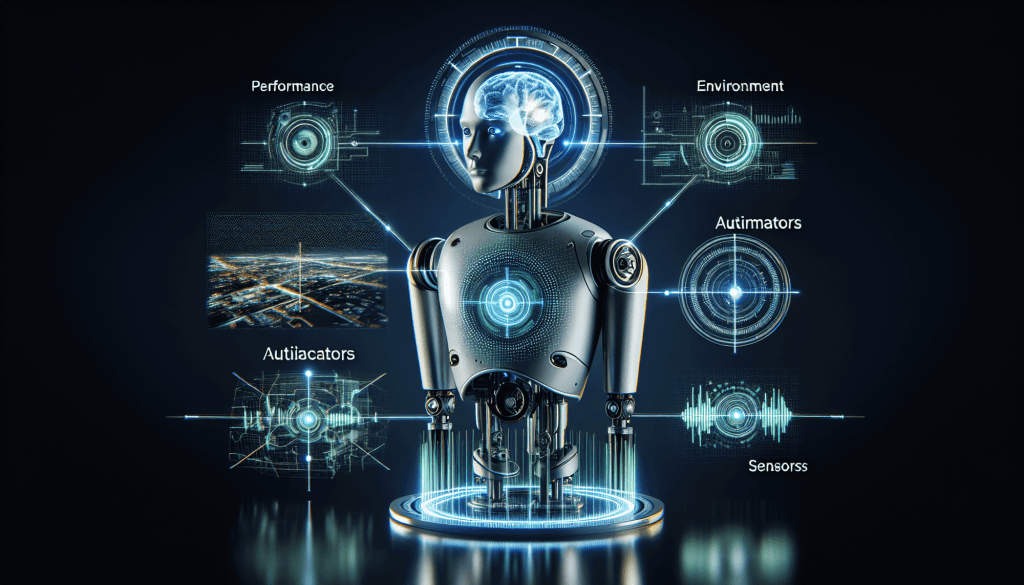
Before diving into the steps of AI agent development, let’s first understand what AI agents are and their significance in the AI landscape. AI agents, also known as intelligent agents, are software entities that can perceive their environment, reason about the information they receive, and take actions to achieve specific goals. These agents can range from simple chatbots and virtual assistants to more complex autonomous systems that operate in dynamic and unpredictable environments.
What is an AI Agent?
An AI agent is a software program that interacts with its environment to achieve specific objectives. It can perceive inputs from its environment, reason about them using AI algorithms and decision-making processes, and take actions to accomplish its goals. AI agents are designed to operate autonomously and adapt to changing conditions, making them versatile tools for a wide range of applications.
Steps Involved in AI Agent Development
Now that we have a basic understanding of AI agents, let’s explore the steps involved in their development:
1. Define Objectives and Use Cases
The first step in AI agent development is to define the objectives and use cases for the agent. This involves identifying the specific tasks or problems the agent will address and determining the desired outcomes. For example, if the goal is to develop a customer service chatbot, the objectives may include providing timely and accurate responses to customer inquiries, resolving issues efficiently, and enhancing the overall customer experience.
2. Gather and Prepare Data
Once the objectives and use cases are defined, the next step is to gather and prepare the data required to train the AI agent. This involves collecting relevant data from various sources, such as text, images, or sensor data, and preprocessing it to ensure it is clean, structured, and suitable for training machine learning models. Data preparation may include tasks such as data cleaning, normalization, and feature engineering to extract relevant information and patterns from the data.
3. Choose AI Algorithms and Models
With the data prepared, the next step is to choose the appropriate AI algorithms and models to train the AI agent. This involves selecting machine learning algorithms, such as supervised learning, unsupervised learning, or reinforcement learning, based on the nature of the task and the available data. Additionally, it may involve selecting pre-trained models or building custom models tailored to the specific use case and objectives of the AI agent.
4. Train and Validate Models
Once the algorithms and models are chosen, the next step is to train and validate them using the prepared data. This involves splitting the data into training and validation sets, training the models on the training data, and evaluating their performance on the validation data. The goal is to optimize the models’ performance by fine-tuning hyperparameters, addressing overfitting or underfitting issues, and improving their accuracy, precision, and recall.
5. Develop Agent Architecture and Interface
With the models trained and validated, the next step is to develop the architecture and interface for the AI agent. This involves designing the underlying software infrastructure, including data pipelines, model deployment pipelines, and integration with other systems or platforms. Additionally, it involves designing the user interface or interaction flow for the agent, defining how users will interact with it and receive responses or feedback.
6. Implement and Test Agent
Once the architecture and interface are designed, the next step is to implement and test the AI agent. This involves coding the agent’s functionality, integrating it with the chosen AI models and algorithms, and testing it to ensure it performs as expected. Testing may involve unit testing, integration testing, and end-to-end testing to validate the agent’s functionality, reliability, and performance under different conditions and scenarios.
7. Deploy and Monitor Agent
Once the AI agent is implemented and tested, the final step is to deploy it into production and monitor its performance in real-world environments. This involves deploying the agent to the intended platform or system, monitoring its interactions and responses, and collecting feedback from users or stakeholders. Additionally, it involves monitoring key performance indicators (KPIs) to assess the agent’s effectiveness, efficiency, and impact on achieving the defined objectives.
Conclusion
In conclusion, AI agent development is a multifaceted process that involves defining objectives, gathering and preparing data, choosing AI algorithms and models, training and validating models, developing agent architecture and interface, implementing and testing the agent, and deploying and monitoring it in production. By following these steps and leveraging the right tools, techniques, and expertise, organizations can build intelligent software agents that deliver value, drive innovation, and enhance experiences across various domains and applications. As AI technology continues to evolve, AI agent development will play an increasingly critical role in shaping the future of AI and driving positive change in the digital landscape.
 TechnoAI
Leave a comment